

Introduction
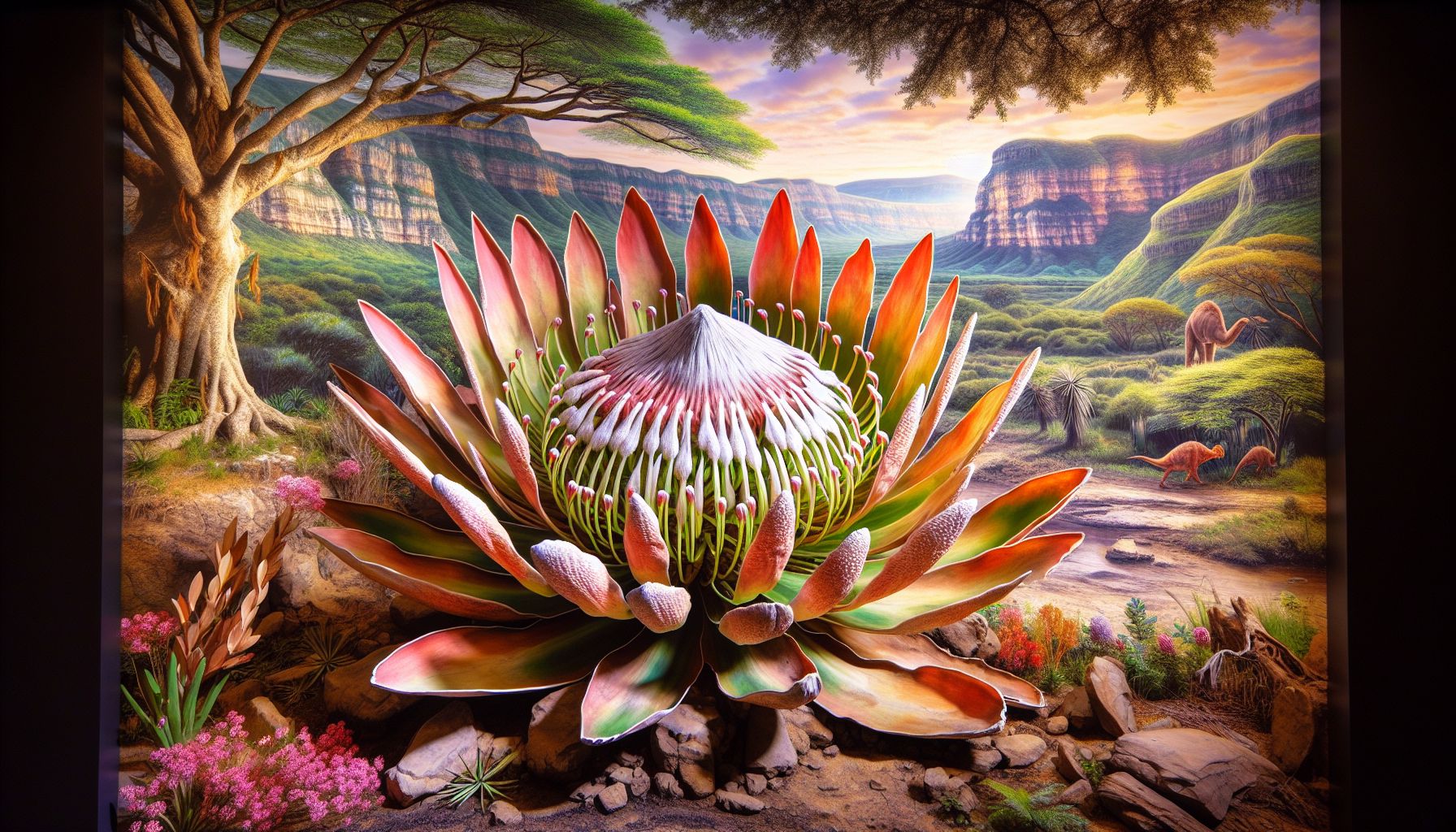
The protea flower is an ancient species that dates back over 300 million years. Known for its unique appearance and incredible resilience, this flowering plant captivates botanists and flower enthusiasts alike. In this article, we explore the origins, significance, varieties, growing conditions, and ecological role of the protea flower. We will also link you to more resources where you can learn about this fascinating plant.
Origins and History
Proteas belong to the family Proteaceae, which is native to South Africa and Australia. The name ‘Protea’ is derived from the Greek god Proteus, who could change shapes, reflecting the diverse forms and colors of these flowers. Proteas have adapted to various climates over millions of years, which makes them some of the most adaptive plants on Earth.
The fossil records show that proteas have existed since prehistoric times. This makes them one of the oldest groups of flowering plants. These ancient survivors have witnessed continents shift and climates change, remaining unchanged in their beauty and complexity.
Varieties of Protea
There are over 1500 species of proteas, each with distinct characteristics. Some of the most popular varieties include:
- King Protea (Protea cynaroides): The largest and one of the most iconic species, known for its massive, colorful flower heads.
- Queen Protea (Protea magnifica): Slightly smaller than the King Protea, but equally stunning with its silver-tipped petals.
- Sugarbush Protea (Protea repens): A smaller protea that produces copious amounts of nectar, which attracts birds and bees.
- Cape Sugarbird’s Protea (Protea longifolia): Recognized for its long and tubular flower heads, it is a favorite among nectar-feeding birds.
Proteas display a wide range of textures, colors, and shapes. Their adaptability allows them to thrive in various environments, making them widely dispersed across southern Africa and Australia.
Growing Conditions
Proteas are hardy and drought-tolerant plants, adapting well to diverse climates. Here are their ideal growing conditions:
- Soil: Proteas prefer well-drained, sandy, or loamy soil with a slightly acidic pH. They do not thrive in heavy clay soils.
- Sunlight: Full sun exposure is necessary for optimal growth and flowering.
- Watering: While they are drought-resistant, proteas initially require regular watering until established.
- Climate: They do well in Mediterranean climates with wet winters and dry summers. In frost-prone areas, they need protection.
Planting proteas in the right conditions ensures that they grow robustly. Proper care involves pruning after flowering to maintain their shape and encourage new growth.
Ecological Significance
Proteas play a significant role in their native ecosystems. Here are a few notable ecological contributions:
- Pollinator Support: Their vibrant flowers are a major attraction for pollinators like bees, birds, and insects, fostering biodiversity.
- Wildlife Habitat: Proteas provide habitat and food resources for a diverse range of fauna, fostering environmental balance.
- Fire Adaptation: Many proteas are fire-resistant, with thick barks or underground stems called lignotubers. This adaptation enables them to survive wildfires, contributing to their ecological resilience.
The ecological importance of protea flowers extends beyond their aesthetics. They contribute to sustaining the biodiversity of their native regions, highlighting their value in environmental conservation.

Symbolism and Uses
Proteas hold cultural significance and practical applications worldwide. They symbolize transformation and change, owing to their diverse forms and ancient existence.
- Decorative Use: Proteas are popular in floral arrangements due to their bold shapes and colors. They make striking centerpieces and can be used in bouquets for special occasions.
- Medicinal Properties: In traditional African medicine, parts of the protea plant are used for nutritional and health benefits.
Beyond their beauty, proteas have functional uses, revealing yet another layer of their importance.
Pros and Cons of Growing Proteas
Pros
- Aesthetic Appeal: Proteas offer stunning visual appeal and diverse forms.
- Low Maintenance: Once established, they require minimal care, thriving in low-water environments.
- Ecological Benefit: They attract pollinators and contribute to biodiversity.
Cons
- Soil Sensitivity: Proteas do not thrive in heavy clay or waterlogged soils.
- Temperature-Sensitive: They are sensitive to extreme cold, requiring mild conditions.
The advantages of growing proteas often outweigh the drawbacks, provided they are planted in suitable conditions.
Conclusion
Proteas are a marvel of nature, combining beauty and resilience. These ancient flowering plants offer a glimpse into Earth’s prehistoric past while playing a vital role in modern ecosystems. From their diverse species and ecological importance to cultural symbolism and gardening appeal, proteas continue to fascinate. To explore more about these remarkable plants, you can visit Cape Nature’s Protea Page and Kirstenbosch National Botanical Garden.
Proteas are a vibrant testimony to the power of adaptation and survival over millions of years, making them a subject of endless fascination for botanists and plant lovers around the globe.