
Growing ranunculus at home can be a rewarding experience. These flowers are known for their vibrant colors and delicate petals. However, growing them requires attention to detail. This guide will help you grow ranunculus successfully, ensuring beautiful blooms and healthy plants.
Understanding Ranunculus
Ranunculus, also known as buttercups, are popular ornamental plants. People love them for their bright colors, which range from soft pastels to bold shades of red and orange. These flowers thrive in cool temperatures and prefer well-drained soil.
Plant Characteristics
- Bloom Season: Spring
- Height: 12 to 18 inches
- Soil Requirement: Well-drained, fertile soil
- Sun Exposure: Full to partial sunlight
- Water Requirement: Moderate watering needs
Knowing these characteristics helps in providing the right environment for the plants.
Selecting the Right Time to Plant
Timing is crucial for planting ranunculus. These flowers prefer cool weather conditions. Plant them during the late winter or early spring. In mild climates, you can plant corms in the fall for spring blooms.
Preparing the Soil
Well-drained soil is essential for ranunculus. Here’s how to prepare it:
- Choose a Location: Select a spot with full sun exposure.
- Amend the Soil: Mix in organic matter, such as compost or well-rotted manure. This improves soil drainage and fertility.
- Check the pH: Ensure the soil pH is between 6.0 and 7.0. You can test the pH using a simple soil test kit.
This preparation sets a strong foundation for healthy growth.
Planting Ranunculus Corms
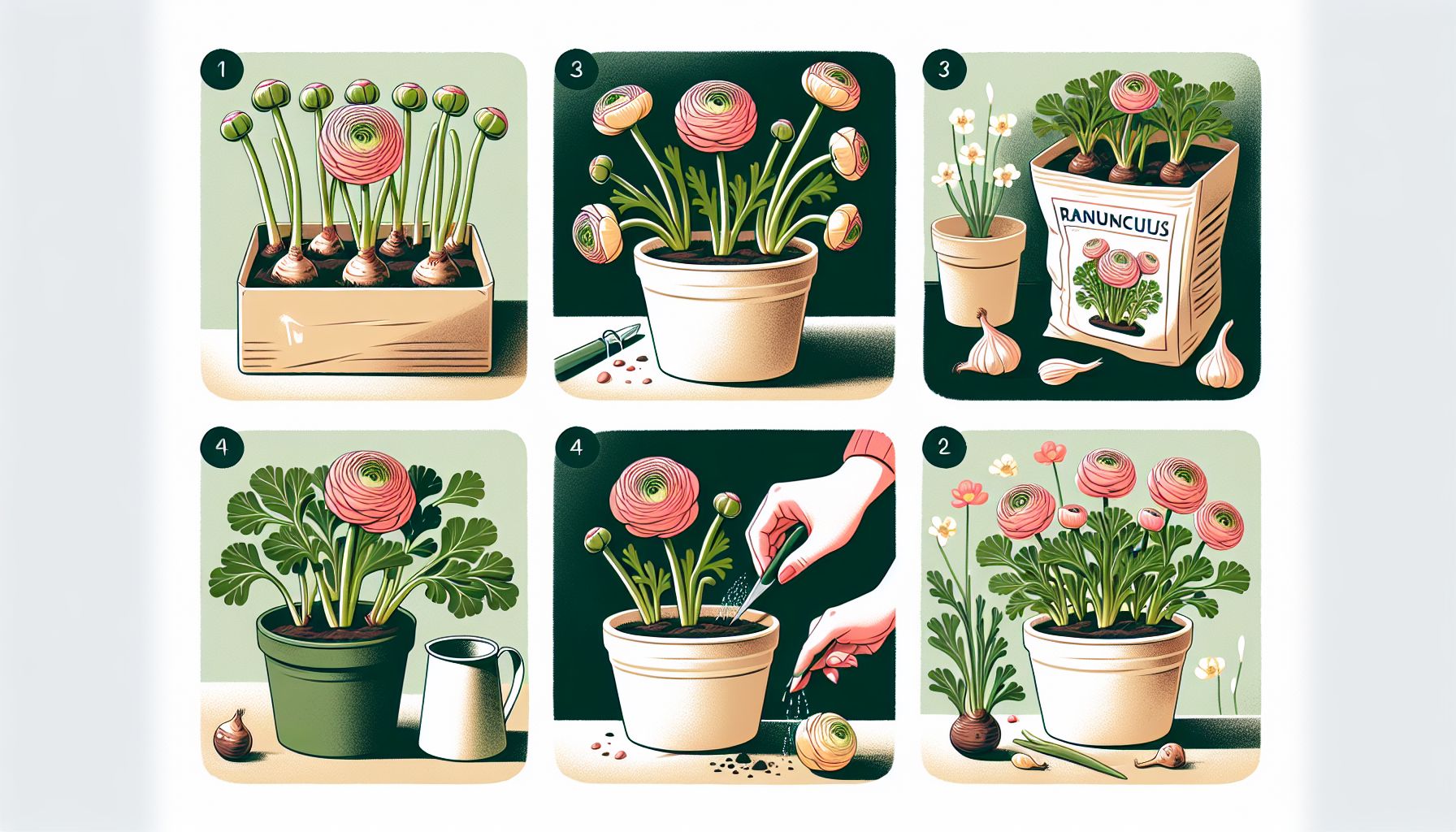
Planting ranunculus corms correctly is vital. Follow these steps:
- Soak Corms: Soak the corms in water for 3 to 4 hours before planting. This process wakes the corms from dormancy.
- Dig Holes: Space holes 4 to 6 inches apart. Each hole should be about 1 to 2 inches deep.
- Position Corms: Place the corm in the hole with the pointed side facing down.
- Cover with Soil: Fill the holes with soil and press down lightly for stability.
Watering Needs
Ranunculus require moderate watering. Here is how you should water them:
- Initial Watering: Water immediately after planting, ensuring the soil is damp but not waterlogged.
- Regular Watering: Once they sprout, water regularly, but allow the topsoil to dry between waterings.
- Avoid Overwatering: Overwatering can lead to root rot.
Balancing water levels is key to preventing disease and promoting growth.
Sunlight Requirements
Ranunculus thrive in full sun, but they can tolerate partial shade. Ensure they receive at least 6 to 8 hours of sunlight per day. Adequate sunlight is crucial for blooms to flourish.
Fertilization
Fertilizing ranunculus ensures they have the nutrients needed for growth.
- Type of Fertilizer: Use a balanced liquid fertilizer or a slow-release granular type.
- Application Frequency: Apply fertilizer every 4 to 6 weeks during the growing season.
- Method: Follow the instructions on the fertilizer package to avoid over-fertilization.
Proper feeding encourages healthy blooms and strong plants.
Pest and Disease Control
Ranunculus can attract pests and are susceptible to diseases. Keep an eye out for:
- Aphids and Spider Mites: These insects can damage the plant. Use insecticidal soap or neem oil to control them.
- Fungal Diseases: Ensure proper spacing and avoid overhead watering to prevent fungal issues like powdery mildew.
Vigilance and proactive measures keep your ranunculus healthy.
Harvesting and Maintenance
Harvest ranunculus when blooms are half opened. Here are a few maintenance tips:
- Cutting Flowers: Use sharp scissors or pruning shears. Cut stems in the morning.
- Deadheading: Remove spent flowers regularly. This process encourages new growth.
- Post-Bloom Care: Once blooming ends, reduce watering and allow foliage to yellow and die back. You can lift and store the corms if necessary.
Taking care of blooms preserves their beauty longer.
Storing Corms
If you need to store corms for the next season, follow these steps:
- Dig Up Corms: Carefully lift corms once the foliage has died.
- Clean and Dry: Remove excess soil and allow corms to dry for a few days.
- Store Properly: Place in a dry, cool location, preferably in a paper bag or mesh sack.
Correct storage ensures corms are ready for re-planting.
Additional Resources
For further reading on growing ranunculus, visit Garden Design and the Farmer’s Almanac.
Cultivating ranunculus at home is possible with careful attention to their needs. By providing the right environment and consistent care, you can enjoy a spectacular display of colors in your garden. Happy gardening!