
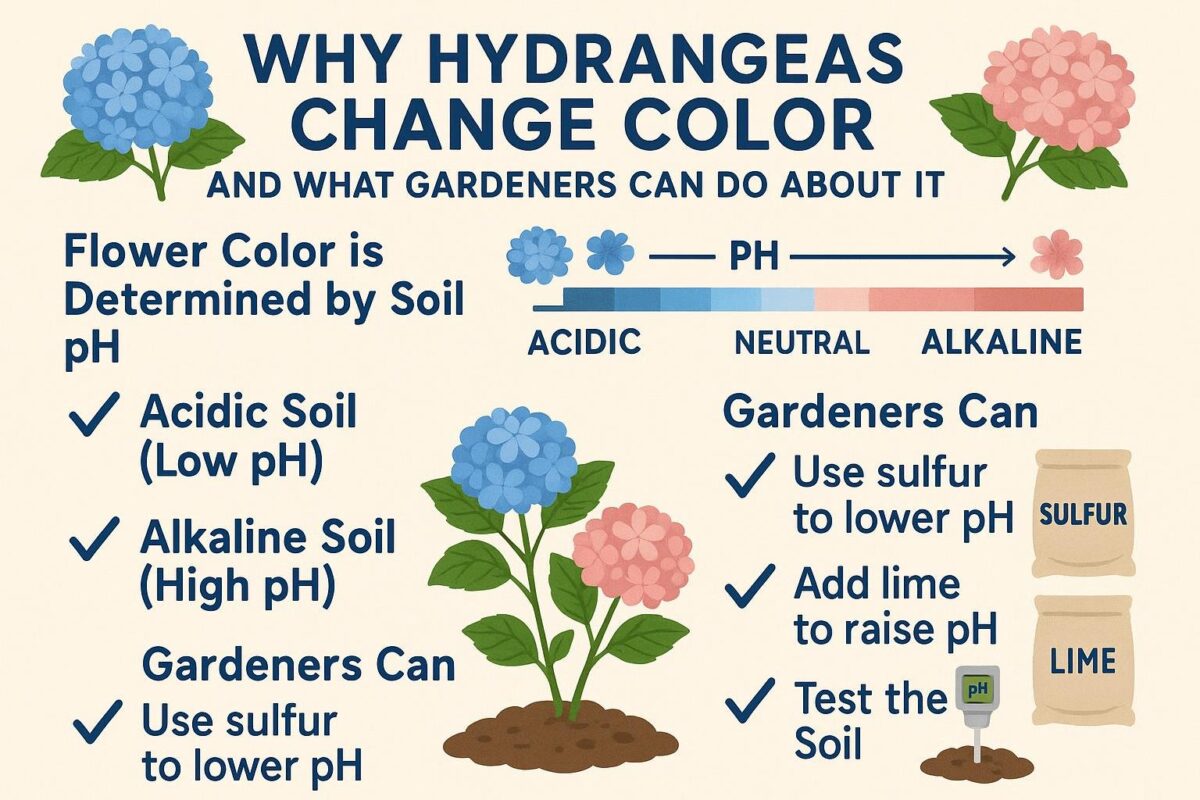
Hydrangeas are a popular choice for many gardeners. Their large blooms and rich colors add beauty to any garden. However, hydrangeas often change color. Sometimes, the change is desirable, while other times, it is not. This guide explains why hydrangeas change color and what gardeners can do to manage it.
The Science Behind Hydrangea Color
Hydrangeas have the unique ability to change color. This color change is largely influenced by soil conditions. Here’s the basic science behind it:
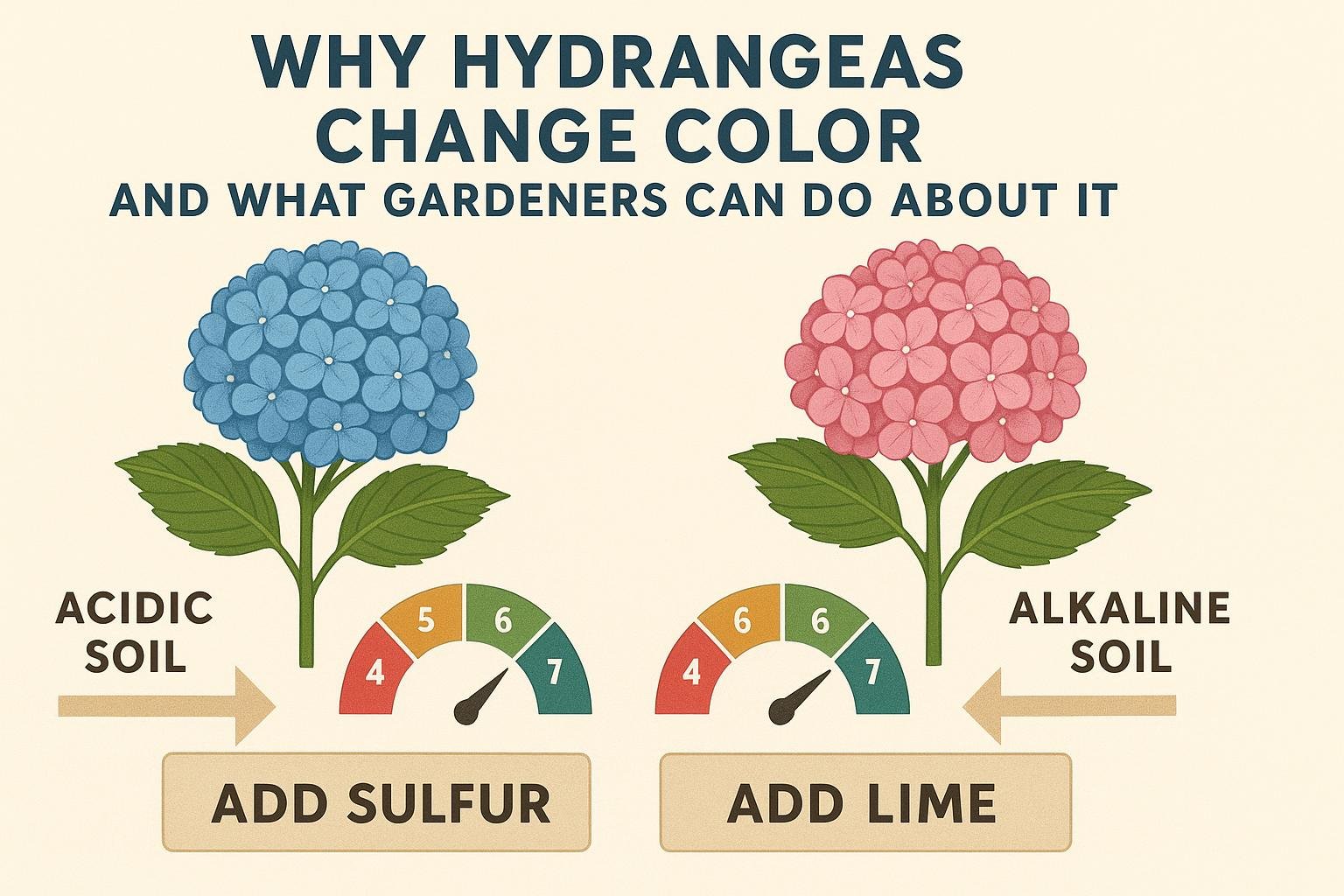
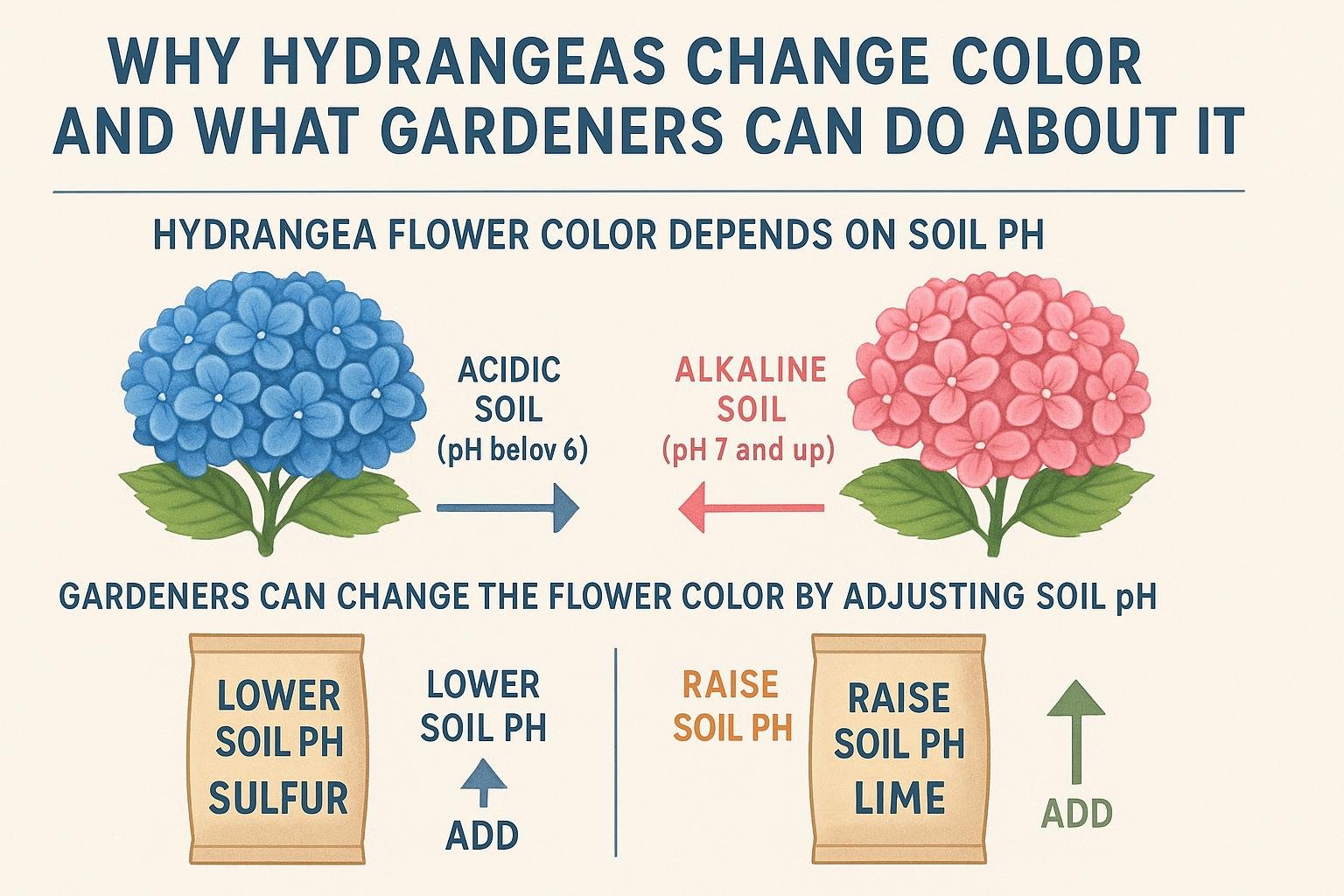
- Acidic Soil: If the soil is acidic, with a pH lower than 6.0, hydrangea blooms turn blue.
- Neutral to Alkaline Soil: If the soil is neutral or alkaline, with a pH above 6.0, hydrangea blooms turn pink or red.
- Presence of Aluminum: The presence of aluminum in the soil significantly affects color. In acidic soils, aluminum becomes more available, leading to blue blooms.
Factors Affecting Hydrangea Color
Besides soil pH and aluminum, several other factors can affect hydrangea color:
- Variety: Not all hydrangea varieties can change color. For example, white hydrangeas do not change color based on soil pH.
- Water: Excessive or insufficient water can stress the plant, affecting bloom color.
- Fertilizers: Fertilizers containing high phosphorus levels can lock up aluminum, affecting the color.
- Climate: Temperature and light exposure can also influence color intensity.
Altering Hydrangea Bloom Color
Gardeners can manipulate hydrangea bloom colors by altering soil conditions. Here are some methods to try:
How to Make Hydrangeas Blue
To encourage blue blooms, increase soil acidity and aluminum availability:
- Add Aluminum Sulfate: Mix aluminum sulfate with water and apply it around the base of the plant.
- Use Acidic Fertilizers: Use fertilizers with lower phosphorus and higher nitrogen levels.
- Plant in Acidic Mulch: Pine needles or shredded pine bark mulch can help maintain soil acidity.
- Water with Rainwater: Tap water can sometimes have alkaline substances. Use rainwater to maintain acidity.
How to Make Hydrangeas Pink
To turn blooms pink, increase soil alkalinity and limit aluminum availability:
- Add Lime: Adding ground limestone to the soil can raise the pH.
- Use Phosphorus-Rich Fertilizers: A fertilizer with more phosphorus can reduce aluminum uptake.
- Avoid Aluminum Sulfate: Do not apply aluminum-based amendments.
Other Ways to Influence Color
Here are additional tips to influence hydrangea color:
- pH Testing: Regularly test soil pH to know how much to amend it.
- Gradual Changes: Make gradual soil changes. Sudden shifts can stress plants.
- Observe Varietal Limits: Some varieties do not change color, regardless of soil changes.
Pros and Cons of Color Changes
Advantages
- Aesthetic Flexibility: Change colors to match garden themes.
- Gardening Experimentation: Offers engaging experimentation for gardeners.
Disadvantages
- Time Consuming: Requires regular monitoring and adjustments.
- Varietal Limitations: Not all hydrangeas can change color.
Examples of Popular Hydrangea Varieties
- Hydrangea macrophylla:
- Known as Bigleaf hydrangeas. They are the most color-variable.
- Hydrangea quercifolia:
- Known as Oakleaf hydrangeas. Primarily remain white but can have slight blushes.
Conclusion
Understanding why hydrangeas change color allows gardeners to enjoy these plants to their fullest potential. Adjusting soil conditions with careful amendments can alter hydrangea colors. Try different amendments to see what works best for your garden. Happy gardening!
For more detailed hydrangea gardening tips, visit The Old Farmer’s Almanac and Gardening Know How.