
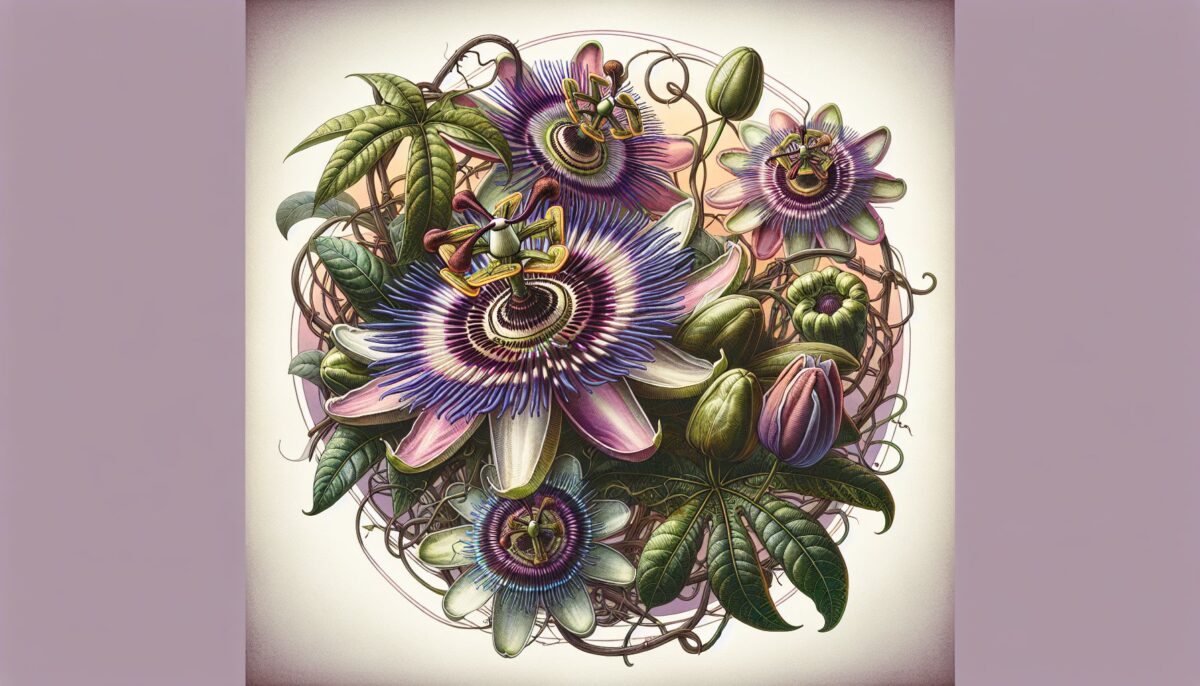
The passion flower captivates with its intricate beauty and diverse uses. Originating from South America, this plant has drawn attention worldwide. Its unique appearance and potential benefits make it stand out.
The Charm of the Passion Flower
The passion flower belongs to the genus Passiflora. It is notable for its striking structure. The plant’s elaborate corona filaments, central stigmas, and vibrant colors attract the eye. Passion flowers grow on vines, producing distinctive blossoms.
Visual Appeal
The passion flower comes in various colors. Common colors include purple, blue, white, and red. Each flower has a unique pattern. The arrangement of filaments and other parts adds to its allure. Read more about its beauty.
Historical and Cultural Significance
The passion flower has historical importance. Indigenous people in the Americas used it for rituals and medicine. Spanish missionaries in the 16th century named it “passion flower” due to its resemblance to Christian symbols.
Symbolism in Religion
Missionaries saw the flower as a symbol of Jesus Christ’s crucifixion. Each part of the flower represented biblical elements. This interpretation helped spread the plant’s fame across Europe.
Medicinal Uses
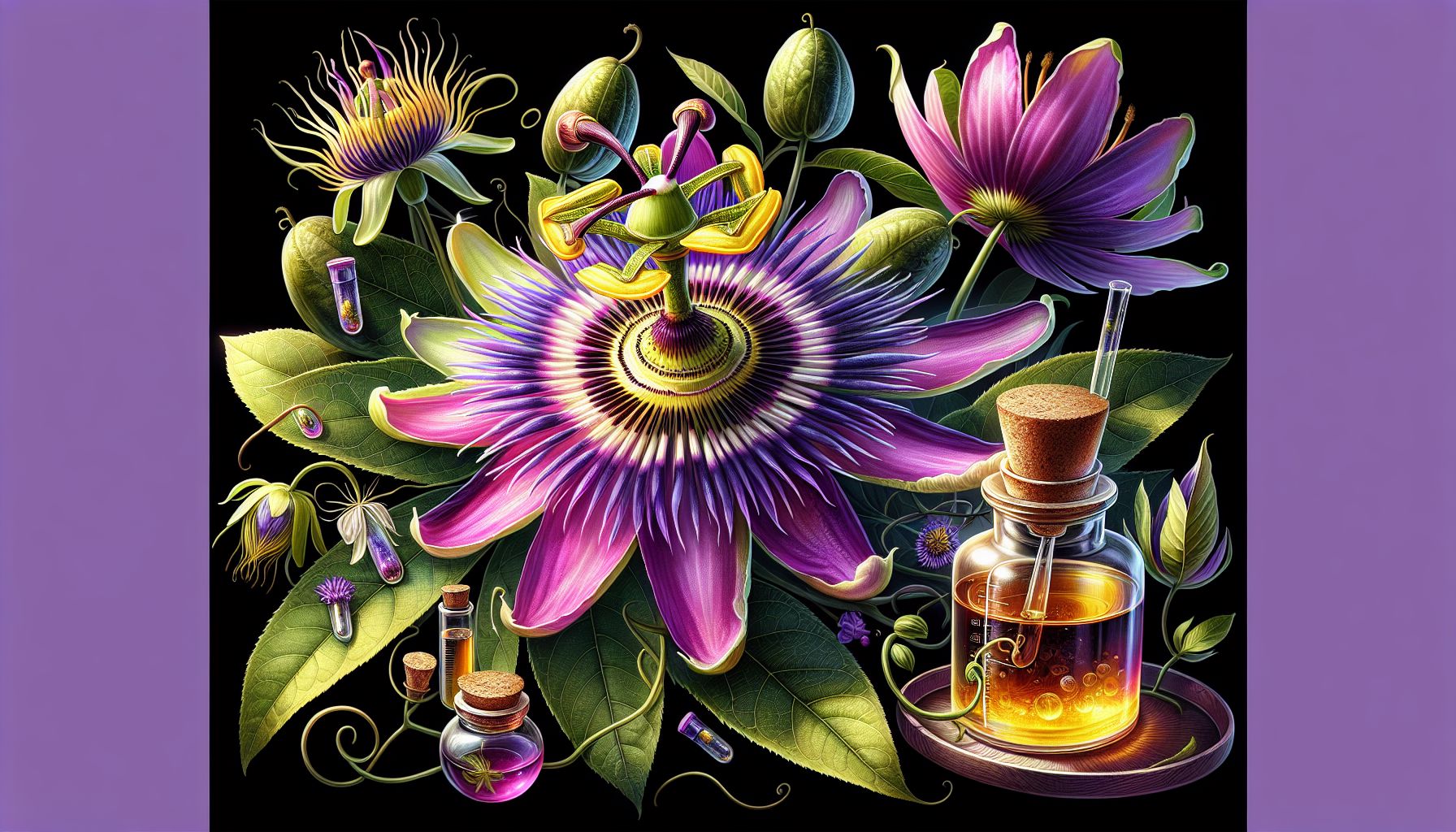
The passion flower has medicinal properties. It is used in traditional medicine to treat anxiety, insomnia, and mild pain. Scientists study its effects on the nervous system.
Anxiety and Sleep Aid
Passion flower may help reduce anxiety. Some studies suggest it enhances GABA levels in the brain. GABA is a neurotransmitter that promotes relaxation. The plant is also used as a sleep aid. It can improve sleep quality without significant side effects according to studies.
Natural Pain Reliever
People use passion flower to alleviate mild pain. Its components may have anti-inflammatory effects. Though research is ongoing, early results are promising.
Precautions
Using passion flower supplements can have side effects. Some people experience dizziness or drowsiness. It is important to consult a healthcare provider before using it. Pregnant women and children should avoid it unless advised by a doctor.
Culinary Uses
In addition to medicinal uses, passion flowers have culinary applications. The fruits of some species, such as Passiflora edulis, are edible and widely consumed.
Passion Fruit Delights
The passion fruit, derived from certain passion flower species, is popular in cooking. It has a sweet-tart flavor and fragrant aroma. People use it in juices, desserts, and salads. Its popularity in the culinary world continues to grow.
Nutritional Benefits
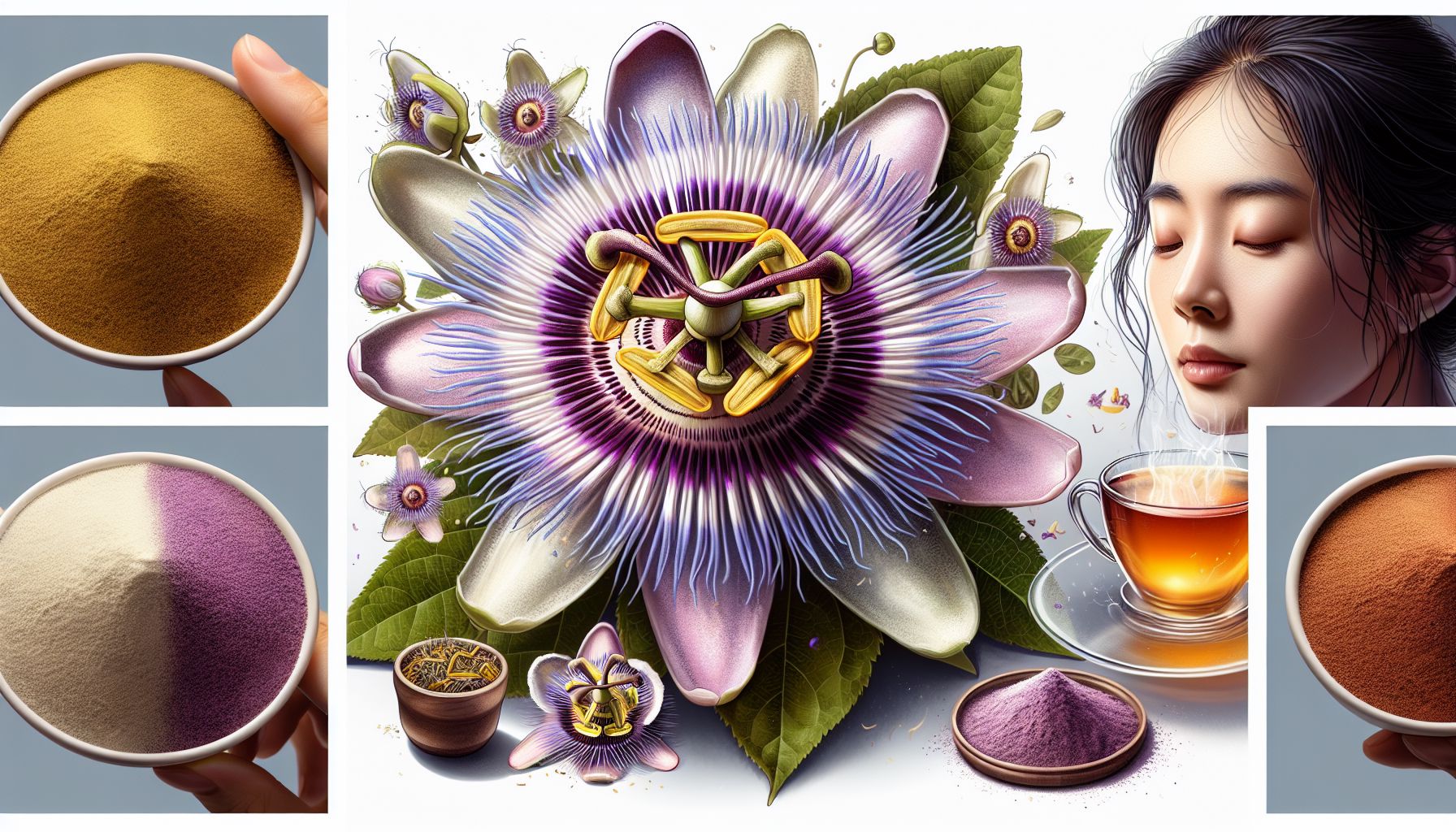
The fruit is rich in vitamins and minerals. It contains vitamin C, vitamin A, and potassium. These nutrients contribute to overall health. Eating passion fruit supports immune function and skin health.
Considerations
Although passion fruit is nutritious, some people may have allergies. Symptoms can include itching, swelling, and difficulty breathing. If allergic reactions occur, seek medical help immediately.
Passion Flower in Horticulture
The passion flower’s beauty makes it popular in gardening. Gardeners appreciate its ornamental value.
Growing Passion Flowers
These plants thrive in warm climates. They require well-drained soil and ample sunlight. Passion flowers can climb trellises and walls, serving as stunning vertical decorations.
Maintenance Tips
Pruning is essential to keep the plant healthy. Removing dead or weak branches promotes growth. The plant may need support like trellises to grow properly. Regular fertilization enhances flowering.
Challenges
Passion flowers attract pests such as aphids and caterpillars. Monitoring and managing these pests is crucial. Some gardeners use natural remedies or insecticidal soap.
Environmental Impact
Passion flowers have a role in supporting biodiversity. Their flowers attract pollinators, including bees and butterflies. These insects aid in pollination, benefiting ecosystems.
Contribution to Biodiversity
In gardens, passion flowers can increase biodiversity. They offer habitat and food for various pollinators. This support boosts the local ecosystem’s health and resilience.
Conclusion
The passion flower fascinates with its dual appeal as a decorative plant and medicinal herb. Its beauty and utility capture the imagination. Whether used in gardens, medicine, or cuisine, the passion flower continues to charm people across the globe. Its potential benefits and vibrant appearance ensure it has a lasting place in many fields.