

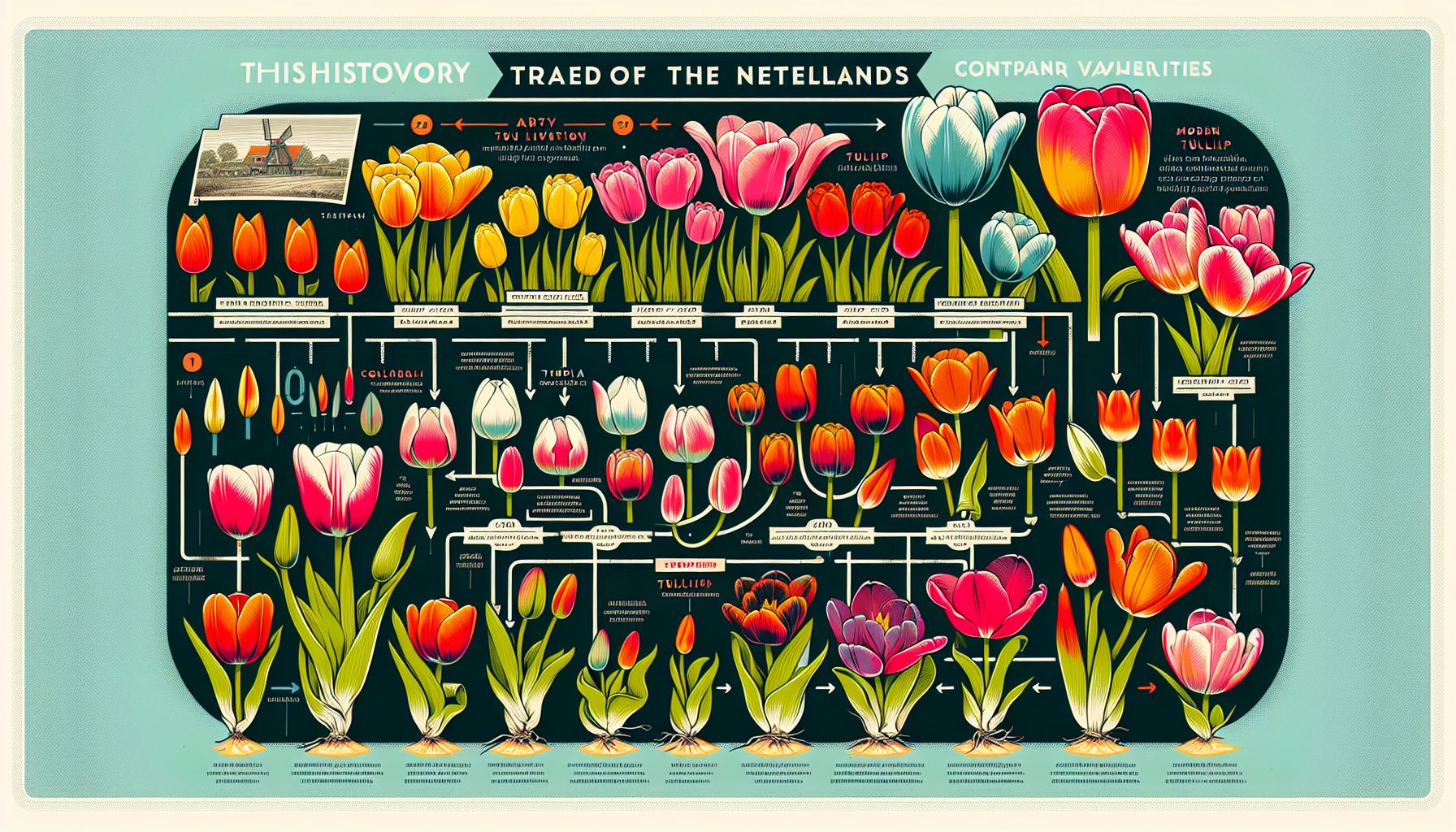
Tulips have captivated audiences worldwide for centuries. Their vibrant blooms adorn gardens, parks, and bouquets. This article delves into the fascinating journey of tulips, from their Dutch origins to their modern varieties trending today.
The Origin of Tulips
Tulips originated in Central Asia. The plant flourished in the wild, surrounded by mountainous terrain. Nomadic tribes likely discovered and admired these striking flowers.
Tulips in the Ottoman Empire
The flower gained prominence in the Ottoman Empire in the 16th century. Gardeners cultivated the plant, valuing its vivid colors and unique petals. Tulips became a symbol of the elite, adorning the gardens of sultans and wealthy citizens.
Tulips Arrive in Europe
Tulips first arrived in Europe in the late 16th century. Europeans marveled at their exotic beauty, quickly adopting them into their own gardens.
The Dutch Tulip Mania
In the 17th century, tulips created an economic phenomenon in the Netherlands. The country was undergoing a period of prosperity, known as the Dutch Golden Age. People saw tulips as luxury items. Prices soared, and tulip bulbs became more valuable. We now refer to this craze as “Tulip Mania.” Eventually, the market crashed, but tulips remained a beloved part of Dutch culture.

Today’s Tulip Varieties
Today, gardeners cultivate over 3,000 varieties of tulips. They vary in color, size, and shape, offering diverse choices for enthusiasts and collectors alike.
Popular Tulip Varieties
-
Darwin Hybrid Tulips
These tulips stand out for their large, vibrant blooms. They can grow up to 24 inches tall. Gardeners appreciate their durability and long bloom time. Learn more about Darwin Hybrid Tulips. -
Parrot Tulips
Gardeners love Parrot Tulips for their extravagant petals. The petals often resemble feathers or flames, adding drama to any garden. -
Triumph Tulips
Triumph Tulips are excellent for colder climates. They bloom early and feature vibrant colors, ranging from deep purples to bright yellows.
Tulips Around the World
Tulips have spread beyond their Dutch homes. They now thrive in gardens worldwide, from the United States to Japan.
Tulip Festivals
Many countries celebrate the tulip with festivals. These events showcase stunning displays of the flower, drawing tourists and locals alike.
-
The Skagit Valley Tulip Festival in Washington, USA offers fields bursting with color every April. This festival attracts hundreds of thousands of visitors each year. Visit the official festival website.
-
The Australian Tulip Festival in Victoria presents stunning displays of tulips amidst a verdant, natural backdrop.
The Impact of Climate
Tulips thrive in cooler climates. Gardeners in warmer areas must take care to replicate conditions suitable for tulip growth. Mixing tulip varieties in diverse climates showcases the plant’s adaptability.
Growing Tulips at Home
Anyone can cultivate tulips with the right knowledge. Plant bulbs in the fall before the ground freezes. Choose a sunny location with well-drained soil. Water them regularly for the best results.
Tips for Tulip Maintenance
- Soil: Use loose, sandy soil to prevent waterlogging.
- Watering: Ensure the soil is moist but not soggy.
- Sunlight: Plant tulips in areas with full sunlight for optimal growth.
The Pros and Cons of Growing Tulips
Like any plant, tulips have their benefits and challenges.
Pros
- Aesthetic: Their vibrant colors make gardens stand out.
- Variety: Choose from numerous types to fit any garden design.
- Seasonal: They offer seasonal beauty, heralding the arrival of spring.
Cons
- Temperature Sensitivity: They may not thrive in extremely warm climates.
- Pests: Tulips can be susceptible to common garden pests.
- Brief Blooms: Tulips offer short blooming periods requiring good planning.
Conclusion
Tulips have an intriguing history, beginning in Central Asia and blossoming into a symbol of beauty worldwide. Tulip Mania highlighted their cultural significance and lasting appeal. Today, they offer gardeners a range of options, from classic Dutch varieties to modern hybrids. While growing tulips presents challenges, true enthusiasts enjoy their vivid beauty. The legacy of the tulip lives on, enchanting those who plant and admire them.